Sunday, 19 May 2013
Revisiting the Old Flame: Robert Muchamore
Robert Muchamore - Guardian Angel (#2 Cherub: Series 2)
Disclaimer: This isn't really a review of the book above, so much as a rant about the series based on reading the above book recently.
I remember my first encounter with Robert Muchamore in much the same way as I remember my first encounter with J.K. Rowling. I was twelve years old, staying in a B&B in Douglas, capital of the Isle of Man. I'd run out of things to read on my holiday. So face either with Dickens, Bronte and Hardy available at the B&B, or with the exciting prospect of a trip to the bookshop, I chose the latter. Twenty minutes later I emerged, clutching a bright orange book with CHERUB: The Recruit blazoned across it. It was about child spies. It had the odd swear word. It was the coolest thing my young reading eyes had ever seen.
Fast forward nine years, the entire Harry Potter series, and a new found love of speculative fiction, and I've read every one of Muchamore's CHERUB series. Constrained by (kind of) realism, his first protagonist, James Adams, is done away with after 12 books - graduating from Cherub an adult. Clearly unable (or unwilling) for whatever reason to put the success away, Mr. Muchamore has progressed to a 'Series 2' - a la TV serials. This time, it features Ryan Sharma, a half-Russian CHERUB recruit, slightly older than James is when we first encounter him, battling against the Aramov criminal gang, a Kazakhstan-based smuggling and drugs ring.
It is interesting to read Guardian Angel as an adult. Its even more interesting to realise quite how disappointed I was when I realised it was out and couldn't find it in my local Waterstones. The series has, arguably, had the biggest effect on me through my childhood of any bar probably Harry Potter. Why is it, then, that I would struggle to name the plot of most of the books, let alone the characters?
Lets examine this: Muchamore's CHERUB is an exiting ride, thrilling in a genre where his only competitors at the time were Anthony Horowitz and Charlie Higson (both of whom I also read - and the first of whom I could do plots for with ease, despite the fact I read them at a similar ages: 12 or 13). It posits an interesting world where there are child agents that can, realistically, discover as much, if not more, than adult agents - by making friends with the children of criminals, by infiltrating groups as people do not suspect them by virtue of their being children. It allows for the slow-build of relationships, the troubles of teenage years, the growth of friendships, all vital to the growing up process, to be explored expertly.
However, where it falls is almost certainly the writing. Compared to Horowitz's prose, or even Rowling's, Muchamore is blunt, to the point; methodical and getting the job done, sure, but not as memorable, or as poignant as the others. Instead, possibly as a result of the pressure of releasing at least two books a year, Muchamore hammers out writing and plots that, like later Alex Ryder books get increasingly far-fetched and escapist, focusing more on missions and less on relationships. As the CHERUB books got further in their series, I began to empathise much more with secondary characters: James' sister Lauren, her boyfriend Rat. These are less fleshed out, sure, but have more interesting dynamics, are less run-of-the-mill characters, seem less of a Mary Sue. Ryan Sharma and James Adams, our main protagonists over the course of the two series, are basiccally interchangeable - attractive white men, friends with 'outsiders' (in James' case a homosexual, in Ryan's a Chinese girl), who will invariably save the day as the PoV characters integral to the mission show their prowess in the face of ever-more-unlikely danger, yet have some fatal flaw that only James/Ryan can withstand.
Couple this with the boys-own style, with women described by their 'great tits' and how 'hot' they are, and you have a recipe for a series that runs downhill. Yes, teenage boys are mainly interested in tits, and so yes it does depicct a sort-of-realism, but should we be encouraging this? Teenagers, especially those from about 13-16 (which sseems to me the ideal age range of these books) are already wankers enough without a bestselling book encouraging it. The early CHERUB season 1 books allowed for varying views of sexuality, though porblematically stereotyped, in Kyle. Lauren and Rat's long-term relationship is interesting and complex. James and Ryan shag around. Why can't we have an interesting main protagonist who's sexual ideals of teenage life do not revolve around 'Boobs?! Where???' *goggles*. Why can't Muchamore provide a female perspective on sex and sexuality, the worries of men about performance or whether or not its going right, or whether she's enjoying it as much as he? Muchamore has a palette of different colours to choose from by virtue of his creation of the CHERUB campus, and fails to go further than different shades of his own blue.
This I could forgive in a three book series, but not in 14 books. At least one should go beyond the, ironically, adolescent imagery and attempt to push into interesting moral territory. Instead we witness cookie-cutter scenarios where the good guys are clearly differentiated as white and male and heterosexual, and they will save the world from the brown and Russian and homosexual and religious and earth-hugging terrorists. Muchamore's works have stuck with me, and influenced me, sure: they are exciting for the boy in me, stuff blows up, guns are handled, these guys speak different languages, know martial arts, are physically fit in ways I could never be. They were the ultimate escapist fantasy. It's just I'm not sure I still want them to be the escapist fantasy for those following me.
Monday, 13 May 2013
From Russia with Love: Wolfhound Century by Peter Higgns
Peter Higgins - Wolfhound Century (#1 of Trilogy)
Peter Higgins' fantastical alt-Russia is an absolute delight to explore in this peculiar-yet-delightful detective-fiction-cum-weird novel. We are set up for one story, a basic detective novel, focussing on a suspected terrorist in a provincial city, are are swiftly, in the first couple of pages, taken not only out of this provincial Russian city, but out of our own world entirely.
The novel follows Inspector Vissarion Lom in his quest to find anarchist supreme Josef Kantor, summoned as an outsider to the city by the complex beaurocracy of the Lodka. His outsider status neatly allows for the city to be explored by the reader as much as by Lom himself, as in so many novels, and yet the worldbuilding is subtle, never stopping and telling the reader but simply moving swiftly through what would be taken as known by our characters.
Along the journey through Mirgorod's streets (the capital of The Vlast, our fictional empire, and also, interestingly, both a real town in Ukraine and a collection of short stories by Gogol) we encounter an overiding mystery relating to the major fantastical point of the book - a war in heaven, between Angels, which has resulted in them falling to Earth. One, Archangel, whom we see as a viewpoint character in some memorably mysterious prose, has survived the fall and is manipulating events while its non-human intelligence attempts to rise from its current position, buried in a sentient-forrest. So far, so strange.
The mystery of Josef Kantor bleeds nicely into the mystery of the Archangel through the use of "angelflesh" and a mysterious world-within-a-world of the Pollandore. Slowly, the true object of the quest becomes the understanding and potential unlocking of this Pollandore, which is similarly bleeding into the world of the book, causing mysterious fractures in time and space and people that are recorded in phantasmogorical delight by Higgins:
"The first picture was a street scene, but the familiar world had been torn open and reconstructed all askew. The street skidded. It toppled and flowed. All the angles were wrong. The ground tiled forwards tipping the people towards the camera. It wasn't and illusion of perspective, the people knew it was happening. A bearded man and an old woman threw up their arms and wailed. A baby flew out of its mothers arms." (pp.96-7)This bleeding of fantasy and reality is, in many respects, a tale of the book as a whole. In her excellent Strange Horizons review, Nina Allen picks up on the bleeding of real-world Russian history in easily discernible analogues within Higgins' book. Admittedly, my knowledge of Russian history is very little, but I also picked up on the founding of St. Petersburg, but with the amount listed on there it is well worth a look. This infringement of the real on the book, and witrhin the book the fantasy on the real could be a complex game being played with the Pollandore, and I hope it is, but it is nevertheless fascinating to look at: why are comparison with Russian history so overt, even down to a sentence level? What is the relation of the Pollandore within the 'real-world' and the books' world? Is the fantastical bleeding caused by the Pollandore another world that we will recognise, or is it a third, parallel fantastical realm? All these questions will, hopefully, be drawn out in the rest of the series; however, in the meantime we pontificate and enjoy.
The book has drawn plaudits quite rightly about its beautiful writing that make comparisons with the prose of China Mieville throughout, and it easy to see why. The depiction of Mirgorod, and the surrounding areas that are explored is as rich and as complex as Mieville's Bas-Lag trilogy, if lacking in the variety of weird creatures. The prose too has moments of an utterly stunning lyrical nature, and the occasional input of the Archangel's voice reminds me of Yagharek's Part-opening in Perdido Street Station. The oft-quoted rain scene early in the book deserves repeating for its sublime nature, rare in a debut-novelist:
And throughout the prose is beautiful, experimental, pushing boundaries in form. There is a particularly memorable moment set within a psychlogical-river of thought and reality bound together later in the book that exemplifies this experimental/lyrical juxtaposition. The writing in this scene, revolving around the mantra 'Time is nothing here' is simply the best in the book: It flits from element to element, allowing for an intimate gaze into the heart of our protagonist while elucidating on the world as a whole and simultaneously being utterly beguiling."Two kinds of rain fell on Podchornok. There was steppe rain from the west, sharp and cold, blown a thousand versts across the continental plain in ragged shreds. And the other kind was forest rain. Forest rain came from the east in slow, weighty banks of nimbostratus that settled over the town for days at a time and shed their cargo in warm fat sheets. It fell and fell with dumb insistence, overbrimming the gutters and outflows and swelling the waters of the Yannis until it flowed fat and yellow and heavy with mud. In the spring the forest was thick with yellow pollen that stuck in your hair and on your face and lips and had a strange taste. In the autumn it smelled of resin and earth. This, today, this was forest rain." (p.5)
In all, the book its a masterful exploration of a different strand of the New Weird. Comparisons to Mieville abound because of the style of prose and city, and, while the story itself doesn't have the subtelety of Mieville's text, and could perhaps have done with being longer in order to encapsulate better the inner-workings (outside of the plot) of our characters' lives, the way the plot itself is handled is excellent. Until the ending. Which is seemingly chucked in out of nowhere, to perhaps make the novel a trilogy. It seems to me like the novel as a stand-alone doesn't really have an ending to complete and connect the beginning to the end. Instead we get a set-piece set up, which in another book would be an excellent late-piece drama before a true completion, but in this is thrust as an ending. It has little to do with the rest of the plot, or in the continuation of the overarching mystery of the Pollandore, and as a result seems too open ended, too forced - don't get me wrong, I like a good open-ending as much as next sentient being, but this seems like, perhaps for publishing purposes, the ending got lost among the excitement of the rest of the novel.
Higgins is truly promising, however. His prose style is splendid, his world-building, while as the Strange Horizons review shows is a little heavy handed in its treatment of history, comes across as immersive and encompassing, with hints of a greater world than the plot dictates, and the plot is enticing and promising in and of itself. Beautiful prose, elegant book, exciting times.
-------------------------------------------------------------------------
Postscript: My thanks to Jon Weir for providing me with a copy of the novel in exchange for review. Apologies for how long it took Jon!
Monday, 6 May 2013
Reviewing the Reviews: Speculative Fiction 2012, editted by Jared Shurrin & Justin Landon
Speculative Fiction 2012 - edited by Justin Landon & Jared Shurin
It's interesting to approach a book of reviews and essays in review form, mainly due to a sense of inferiority. Any review that I write of a collection purporting to be 'The best online review, essays and commentary 2012' (Front Cover) is, necessarily, going to bring to mind those works in both my and the readers' minds. And that is daunting, as they really are good.
Jared and Justin, in their introduction, state, one assumes semi-ironically that:
[I]t isn't all roses. Let's be honest, no one takes us seriously. 'Blogging' is barely reviewing and certainly never 'criticism'. ... While our work sticks around, you're only as good as your last post. And once something is off the front page, it might as well be gone forever. [p.8]In creating this collection of 52 reviews, essays, commentary, criticism, and works of speculative love, I'd argue that Jared and Justin have destroyed their own hypothesis. By collecting these blogs, these important, redeemable, estimable, beautiful creations that form the basic framework of the modern Genre fan's connection with the Speculative World as a whole, the editors are elevating what was once not taken seriously into a fully fledged work of criticism. The very action of collating such a collection elevates its contents to something more than they were when written. The inclusion of 'best' gives an air of authority and sense of purpose that the collection more than deserves.
Split into three sections, 'Reviews', 'Essays' and 'SF Life', the collection is clearly designed to be dipped into with whatever strikes ones fancy. I didn't do this: I read it cover-to-cover, minus a couple of works (namely the two China Mieville reviews, as I'm a massive fanboy, and Matt Hilliard's WorldCon 2012: Fragments as I'd read about it and it sounded like a fascinating technique - more about that later.) I feel, and it was touched upon in the excellent Reddit AMA that occurred last week, that the collection could have done with a touch more differentiation of themes throughout it. Obviously, the reviews section is necessary, but within 'Essays' and 'SF Life', there were definite trends to be seen, particular regarding discussions of Gender and Diversity in Genre. Creating a section for this, however, could perhaps be problematic in itself, especially were essays touch upon gender/diversity, but are focused elsewhere: in discussions with other essays, perhaps, or another theme entirely. N.K. Jemisin's essay But, but, but - Why does magic have to make sense? springs to mind with regards this. Ostensibly related to the current proliferation of self-contained magic systems (see Brandon Sanderson, perhaps most famously, and more recently Brian McClellan), as with much of what Jemisin writes, issues regarding the depiction of race and diversity in fantasy make an appearance.
The collection's focus is of the traditional print-book form of Speculative Fiction for the most part, but does not exclusively touch upon that. I found, however, that the essays that I was least interested in were touching upon these alternate aspects of the Speculative Fiction oeuvre - Tansy Raynor Roberts' Where the Wonder Women Are: Supergirl and Chris Garcia's Ma Vie En Zines respectively. Most likely this is a reflection of my tastes: I'm not really versed in any way or form with Fanzines or Comics, and thus these essays didn't speak to me in the same way as others did, particularly with their specificity. Where other essays that were not exclusively focused on the traditional-book form suceeded, in my eyes, was their application as general, broad categories: Feminism, Politics, Agency, Homosexuality. The best example that I can see of this, in relation to the above essays, is Gav Thorpe's Are Elves Gay? - while again an essay ostensibly on a subject I have relatively little experience/interest in (the Black Library and Warhammer universe) its subject matter was broadly perceptions of homosexuality in shared worlds, and was an astute and thoughtful answer to a fan question; though Aishwarya Subramanian's What is it Like to be a Dragon similarly applies colonialism to My Little Pony, in a short but thought-provoking essay. I think that the inclusion of these elements of Speculative Fiction was, however, a positive - perhaps more focus in the essays/SF life sections on those works that transcend just one format, that focus on the overarching themes that are of interest to all forms of Genre could make readers like me more interested in comments on comics, or Zines, or whatnot. Further, more diversity in reviews (only one review was not of a book - Maureen Kincaid Speller's The New Yorker 'Science Fiction' Special) is something to be desired: with the abundance of Movies, TV Shows, Comics etc. etc. released last year (and reviewed last year), its something to be looked at, perhaps.
Ignoring all this silly nitpicking, we have an astoundingly god collection on our hands. Jared and Justin have excelled here, with big thanks, I'm sure, to the community. We have essays that are academic in nature (Paul Kincaid's The Widening Gyre), essays that are experimental (Matt Hilliard's WorldCon 2012: Fragments - which uses non-linear, present tense fragments to tell an astonishingly clever tale of Matt's first World Con), thoroughly researched and backed up reviews (particularly Lavie Tidhar on Embassytown, Larry Nolen on Alif the Unseen, Joe Abercrombie on The Blade Itself [a really interesting revisiting of his own work], Adam Roberts on Atlas Shrugged, Martin McGrath on The Fen and the Fallen and Cynthia Martinez on Stormdancer [which made me not want to read the book - a positive for me].) We have a stunning essay on Cowardice, Laziness and Irony, in response to Kincaid's The Widening Gyre, by Jonathan MacCalmont (which I disagreed with almost entirely, yet thoroughly recommend for a long lunch break). We have tentative steps into the statistics of blogging with Lady Business. We have Priest's Clarke post. We have responses to the idiotic Revealing Eden fiasco. We have the spectrum of what was what on the interwebs in front of our eyes. And it was good.
The only real issue I have with the book is the production. There are just too many formatting errors for a book being sold for actual real moneys. These range from speech-marks the wrong way round to missing words to sentences that have a line break in the middle of them. While the most major is a missing word at the end of the Stormdancer review, they happen so frequently that, for a human like myself who is slightly OCD about grammar etc., it sucks the reader out of the entertainment that each critical piece has. The editors, and/or Jared's Jurassic London imprint could have done with freelancing a proofreader, or doing so themselves. I appreciate that the editors do make reference to this in the note-from-the-editors at the back of the book, and that lessons will (hopefully) be learnt it book creation, but certainly when one considers that Jurassic London have previous with their Pandemonium series, you expect a more professional end product in those terms.
That slight blot aside, we have the perfect companion to the internet-age fan. If you're conversant with blogs, you'll know some of these articles already. That doesn;t matter, as reading afresh is just as fun, and, what's more there are so many excellent articles you won't have. From Sam Sykes on Fun and Fantasy (Scarper, Montgomery), to separating author politics and author writing (What do China Mieville, Orson Scott Card and Frank Miller have in common? by Myke Cole) to Circus' in fantasy (sadly missing out on the excllent Night Circus by Erin Morgenstein - The Circus as Fantastic Device by Chris Gerwel), SpecFic 2012 is a romping ride through 2012's blogging scene, and a stunning example of the maturity and intelligence of our community. I know what's going on my Hugo Ballot next year...
Sunday, 5 May 2013
Week o' Geek
I've had a bit of a mad week last week: a celebration, if you will, of geekery that neatly coincided with the fact that I'm FREE from university until October. Silly academia.
All started Monday with the Lauren Beukes launch of The Shining Girls over at Forbidden Planet - got a signature of my lovely copy, in pretty silver on the front, black page. It looks lovely. Essentially spent the launch queuing and listening to Molly Flatt and Tom Hunter chatting about the upcoming Write the Future, feeling a little silly. But hey, it was good procrastination from the last day of essay writing, and, while nowhere near as fun or as social as the Sarah Pinborough launch, kept me amused. Maybe that's partially down to Forbidden Planet's layout as much as anything - the basement, if you don't know, is both wonderful and exceedingly cramped. Full of books and bookshelves, it doesn't make for good mingling, and though I did spot a bunch of people I know (Jared Shurin, Den Patrick etc.), I left them to their chatting are wandered home. Not the best, but hey hum.
Tuesday's Kitschie's event, a panel/reading with Benjamin Percy, Lauren Beukes (again) and Warren Ellis was much better - two great readings and an excellent presentation from Beukes, and a great panel on modes and methods of storytelling followed. And then a good hour+ of bar-shaped mingling. Which I always love. Benjamin Percy has the greatest voice in the world ever, and I may buy my first audiobook since my cassette versions of Harry Potters 1-3, just because he reads them. Seriously. Listen to this. Its like molten, evil, chocolate. I got Lauren to sign my Zoo City & Moxyland, and bought both Gun Machine and Red Moon. Mingling wise, met the delightful James Smythe (big fan of The Explorer, which I'll be rereading this summer, at the same time as reading The Testament and The Machine), Gerard from the Science Fiction Book Club, as well as having lovely chats with Den Patrick and Tom Pollock (as usual), and accidentally blanking Kim Curran. I placed her face, but just went 'er, hi'.
Wednesday saw Write the Future, a symposia on futurificness (yes, that is a word. I invented it.) In eight talks and a panel we explored varying aspect of the future, and the methods with which it can be written both literally and metaphorically. There were some real highs (Molly Flatt, take a bow - she looked at Social Media for writers, and discussed it astonishingly.) and a few lows (the panel - which was exceedingly chair led, and seemed to have 4 disparate personalities in Smári McCarthy, Joanna Kavenna, Jane Rogers and Paul Graham Raven, talking on the nature of truth in writing. It didn't really work.) All in all, it was an excellently run event which I'd have like to have blogged about in more detail - however, I missed the opportunity while it was all fresh in my mind by being hungover due to a party in the morning. Bugger. With luck, it will be back next year - possibly a little more thematically resolute, due to longer to plan it.
Thursday finally saw a panel hosted by the post-apocalyptic bookclub at Waterstones Piccadilly. Featuring Frances Hardinge, Tom Hunter, Adam Roberts, Anne Perry, Rob Grant and Jeff Norton, topics ranged wildly from George R R Martin naked in a sauna (thanks for that image Mr. Roberts!) to award shortlists to the cultural reasons behind the plague of zombie-apocalypse novels in publishing. Again, a wonderful event, one that was full of interest and lovely people. Irritatingly I thought I'd forgotten my copy of A Face Like Glass for Frances to sign, but when I came home I found it in my bag. Balls and buggery. However, I did make Anne Perry's day by breaking the mold and getting her to sign her page of Adventure Rocketship! Jared also signed his, and I'll be taking it with me to World Fantasy and Nine Worlds (if I decide to go to the latter) to see how many signatures I can get onto it. Fuck it, why not?
So, all in all, a truly delightful week. Lovely people, interesting events, a free coke (thanks Tom!), good, new books, and more excitement in my geeky geeky life. Bring on the next lot.
Thursday, 2 May 2013
Outside of a Dog
I'm not normally one to post the slightly-narcissistic, me-me-me posts on this blog, but a) its mine, and b) no one will read it anyway, so fuck it, I'm posting anyway. I'm normally going to try and keep this review/genre news/comment focussed but, as I said, hey hum.
You may have notice by that yellow ball in the sky ("It burns my eyes!"), but its SUMMER. This is wonderful, in that I can now relax outside. It is also wonderful because, as a university student, I now have 5 months (5 fricking months) with nothing to do.
I finished my essays on 30th April, and thus am free. Second year at uni over. Freedom is mine. And I'm a little daunted by it. I have a student loan to live on and little else, and thus job hunting is the order of the day - applied for one at Foyles, and a couple of bits-and-bobs jobs, but I'd love a decent one.
More excitingly, however, I'm applying for Work Experiences to continue my hunt for a place in publishing come the end of my degree. I'll be working on my Work-in-Progress (12,000 down, 100k+ to go, as well as short stories as and when the mood takes me. I've submitted a review for publication elsewhere. I've submitted a short story to the Pandemonium: Ash chapbook from those Pornokitschie humans.
I've spent the last week, pretty much, at genre-y events (roundup to come at the end of the week).
All in all, I feel productive.
And I haven't even mentioned the reading:
I've decided to get a headstart on my dissertation, by reading all the books I'm doing it on over the summer. I will, of course, review them on here. They are genre-y, after all.
A big thanks to the excellent peeps at Fantasy Faction for linking me to ALL THE LONDON BOOKS when I posted a thread over there. I'm looking at maybe 10-15 or so over the summer, with view of whittling that down when I start writing. I know for certain that Tom Pollock's The City's Son (& probably the sequel), China Mieville's King Rat and Un-Lun-Dun (& possibly Kraken), and Paul Cornell's London Falling will all be in the dissertation proper.
Dissertation has slowly morphed from an unwielding so much London stuff into the slightly-more-wieldy-but-still-prone-to-falling-over London Within and London Without - looking at books where there is a 'normal' London that overlays an 'under' London, which only a select few can access. If you have any advice/suggestion, whether critical or novels/short stories/plays/interpretie dance troupes, please leave them in the comments!
So yeah. Narcissism a-go-go. Summer will be busy.
You may have notice by that yellow ball in the sky ("It burns my eyes!"), but its SUMMER. This is wonderful, in that I can now relax outside. It is also wonderful because, as a university student, I now have 5 months (5 fricking months) with nothing to do.
I finished my essays on 30th April, and thus am free. Second year at uni over. Freedom is mine. And I'm a little daunted by it. I have a student loan to live on and little else, and thus job hunting is the order of the day - applied for one at Foyles, and a couple of bits-and-bobs jobs, but I'd love a decent one.
More excitingly, however, I'm applying for Work Experiences to continue my hunt for a place in publishing come the end of my degree. I'll be working on my Work-in-Progress (12,000 down, 100k+ to go, as well as short stories as and when the mood takes me. I've submitted a review for publication elsewhere. I've submitted a short story to the Pandemonium: Ash chapbook from those Pornokitschie humans.
I've spent the last week, pretty much, at genre-y events (roundup to come at the end of the week).
All in all, I feel productive.
And I haven't even mentioned the reading:
Not Pictured: Kate Griffin (Because I haven't bought it yet), Neal Gaiman's Neverwhere (its in a cardboard box...), Jonathan Stroud's Amulet of Samarkand (Box.), whatever else I can think of.
I've decided to get a headstart on my dissertation, by reading all the books I'm doing it on over the summer. I will, of course, review them on here. They are genre-y, after all.
A big thanks to the excellent peeps at Fantasy Faction for linking me to ALL THE LONDON BOOKS when I posted a thread over there. I'm looking at maybe 10-15 or so over the summer, with view of whittling that down when I start writing. I know for certain that Tom Pollock's The City's Son (& probably the sequel), China Mieville's King Rat and Un-Lun-Dun (& possibly Kraken), and Paul Cornell's London Falling will all be in the dissertation proper.
Dissertation has slowly morphed from an unwielding so much London stuff into the slightly-more-wieldy-but-still-prone-to-falling-over London Within and London Without - looking at books where there is a 'normal' London that overlays an 'under' London, which only a select few can access. If you have any advice/suggestion, whether critical or novels/short stories/plays/interpretie dance troupes, please leave them in the comments!
So yeah. Narcissism a-go-go. Summer will be busy.
Saturday, 27 April 2013
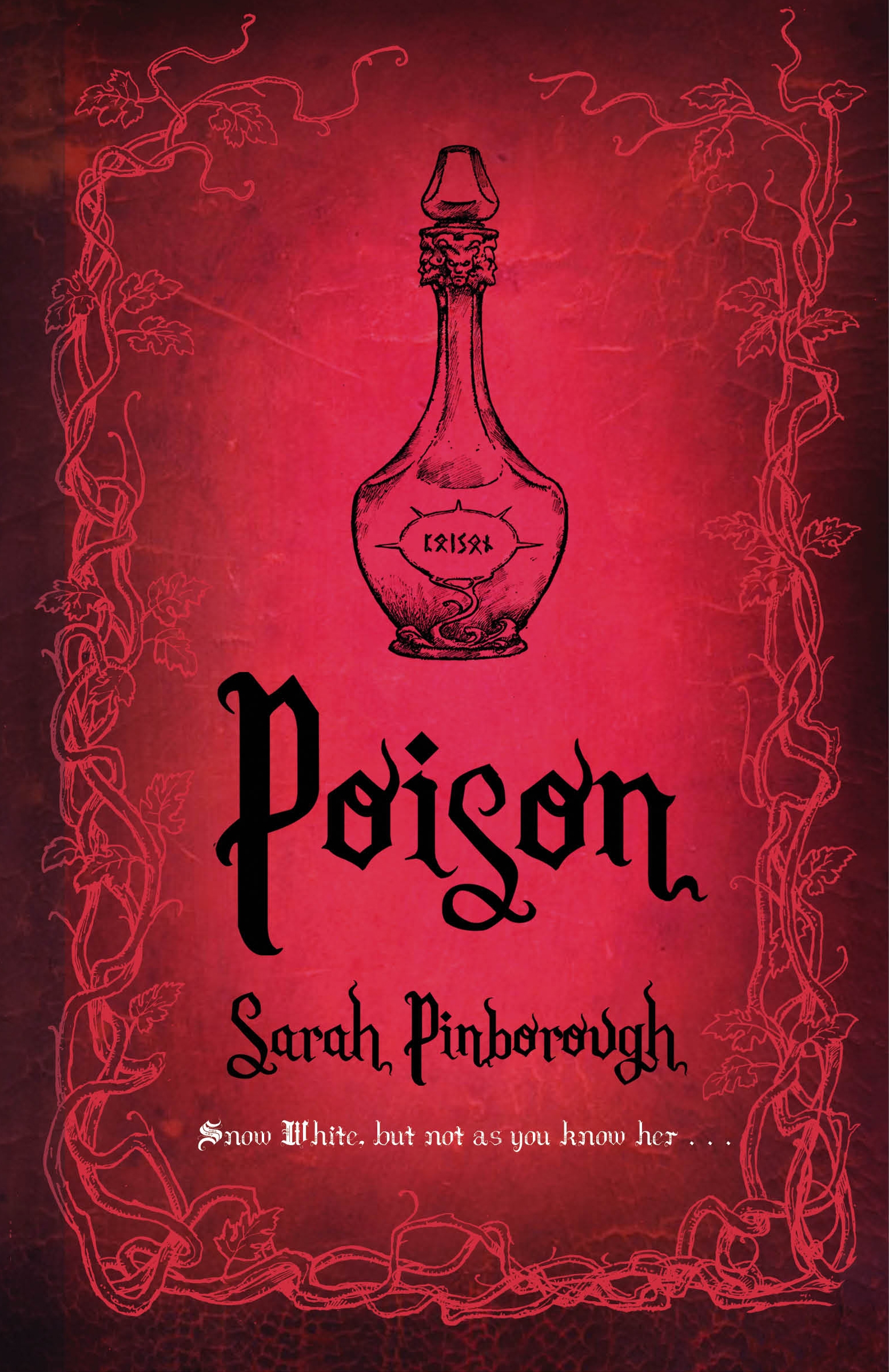
Fairies Wear Boots: Poison by Sarah Pinborough
Sarah Pinborough - Poison (#1 of Fairy Tale Trilogy)
Quite why fairy tales are such a noveau vogue thing to do is questionable. In the latest edition of The Readers podcast, Gav Pugh argues that it is perhaps something to do with a generation of 30-40 y/os now at the helm of the creative arts responding to the Disney stories of their youth. Disney has come a long way from the one-dimensional tales of Aladdin or Sleeping Beauty, particularly with its acquisition of Pixar, and it is only right that the Fairy Tale story goes that way too.
Pinborough's tale of Snow White, therefore, brilliantly subverts the classic fairy story, adding dimensions to characters at a rate of knots. The classic story is there for all to recognise: The wicked queen, the dwarves, the prince, snow white in the glass coffin, the apple. Even the plot is broadly similar to the one we all know. But its how we get from a to z that is different and refreshing.
The characters are subverted, taken out of their pastiche-filled lining and given motive and reason behind their actions. The queen slowly become bitter over the years due to Snow White's freedom, her ability to effortlessly charm a populace while the queen must rely on terror and tyranny to achieve the same level of devotion. Snow White is a far cry from the whiter-than-white prissy girl of the Disney cartoon, a free and wilful girl, with a kind heart: she rides a horse like a man, wear breeches, and can outdrink and out dance most.
Pinborough also cleverly manipulates other famous Disney-fairy stories into the piece; both Aladdin and Hansel and Gretel are hinted at, while the trilogy of books (Charm and Beauty are out later this year, focussing on Cinderella and Sleeping Beauty respectively) is not so much linear than circular: When reading Poison, there are distinct references to an action that has occurred before, with regard both the characters of the Prince and the Huntsman.
Outside of the character-based subversion, the plot also makes the fairy tales more real in the action itself. Snow White takes the lead in the bedroom, a feminist icon in handy novella form as she does what she will with her life, and leaves no man to command hat she should or shouldn't do, much to the chagrin of the creepy Prince. There is sex, and it is quite sexy sex - there is no fade-to-black, but nor is the sex lingered on for pages and pages: the scenes are some of the best written out there for judgement of tone, and when its right to cut. And besides, any novel that starts with fellatio is bound to be good, right?
There is a twist, and it made me very angry: just as any good twist like that should. Its a testament to how Pinborough builds her characters that we have such a depth of feeling for the character of Snow White by the end that we don't thank god that her namby-pamby prattling is off our screen now, but instead pity her fate and another's mind for what occurs.
Pinborough lines up her shotgun at the expectations of fairy-tale, and peppers it full of holes. She takes the mundane, and makes it modern, and this is a throughly modern take on the genre, even while using its tropes against it.
Overall Rating: 4.5*
Addendum: Oh the pretty cover! And the illustrations inside! So pretty!
Sunday, 21 April 2013
Youth and Young Fanhood
I live in London, centre of all things UK fannish - probably because its the capital of England, and where all the publishers are based. So when interesting SFnal events occur, I've started making a pledge to go along to them as best I can, especially when thy interest me. As a result of this, in the last month I've been to a panel discussion on the BSFA awards, Fantasy in the Court at Goldsboro Books, and the launch of Sarah Pinborough's excellent Poison.
I thoroughly enjoyed each evening, and would estimate that the attendees of the three, when put together, make up a significant proportion of London's geek-culture, certainly when it comes to traditional definitions of 'fandom'.
At the Pinborough signing, I was in a circle of discussion with Jon Courtenay Grimwood, Joe Abercrombie, Tom Pollock, Gav Pugh and myself and made a comment about the ubiquitous facial hair on display. All these fine men have equally fine facial follicles, or a similar disdain for razors, depending on how you look at it. I don't, and thus felt slightly naked before their fearsome chin-bristles and authorly might.
The reason I lack chin bristles, apart from an enjoyment of being clean shaven? I couldn't grow a beard if I tried. I'm nigh on 21 years of age, and can't grow a beard. The shame. Some combination of youth and late onset puberty have combined to make my jaw unable to be warmed by the furry friend of fantasy authors. This is embarrassing, but a fact of life, that I shall have to overcome, probably by finding a unique selling point - like wearing glasses, or not balding (unlike most/all of the above... Cheeky)
This has a serious point, however: I was the youngest person at every single one of those three events by at least five years.
If you discount industry, who some (including me) would argue have to attend a book launch or industry-heavy meet-and-greet, I was probably the youngest by eight-to-ten years. This shocks me, and clearly says something about fandom for us to consider, namely: is fandom defined by age?
There are two obvious answers to the questions of youth and fandom. 1) Youth doesn't like fandom, and 2) Fandom doesn't like youth. I'd argue that both are equally applicable.
An article in The Guardian recently pointed out that the last of four key developments in a person's reading life is the ability not to give a shit about other people's opinion of what you read, and just reading for your own pleasure: most youth have yet to reach that stage. - They are busy reading Dostoyevsky because you are meant to read Dostoyevsky. I'm reading Hardinge because I want to read her. I've reached stage
Even where those my age have reached this stage, they just aren't interested. Most people my age are out shagging, or drinking, or smoking, or taking drugs, or being academic, or having existential meltdowns about their lives as they adjust into 'true' adulthood, while facing the end of their secondary or tertiary education. I am not: I am lucky enough to have had a steady (and rather splendid) girlfriend for six years (aww), to have a solid idea of what I want to do in my life (publishing & writing), to have established hobbies (football, reading, refereeing), to not drink often or much, to not smike. In short, I'm a touch odd when it comes to my age group. Youth is not cut out for the rigours of fandom. It lacks the disposable income to pursue it to the nth degree: it would rather go to Aiya Napa than Eastercon.
Most of all, it lacks reader-experience. Once again, I strike myself as an exception rather than a rule in terms of the amount I've read. I read 50+ books a year and yet I haven't read everything by my favourite author in the world, China Mieville. I certainly would be blown out of the water on anything approaching a rigourous discussion on science fiction pre-2012 by any established (or semi decent) fan. Simply because I was 18 in 2011, and had other things on my mind. And this is a difficult obstacle to overcome, especially when attending an event for the first time, unsure as to who or what to talk about.
Fandom as a result does not accept newcomers easily. Its an insular community of authors and fans who know everyone and each other, who appreciate and keep in touch via the interwebs, the BSFA, the BFA, Twitter and the like. To reiterate, everyone knows everyone. This is intimidating. To walk up to Joe Abercrombie in conversation with Mark de Jager is to walk up to people who've known each other as acquaintances, maybe even friends, for five years. I met Mark, when pissed, once at the Goldsboro Books thing. I met Joe once, when pissed, at Blackwell's last year. To integrate, you have to have a presence, establish an identity over time, to join a group that is already formed.
Youth lacks that easy way in, that knowing-someone-who-knows-someone that is, for some, the key to entering fandom. It lacks the life and reading experience necessary to take the bull by the horns and chat to a randomer about feminism in Epic Fantasy.
Youth is an outsider to fandom, in general not ready for it. But simultaneously, I think fandom is not accessible to youth, to the new, to those unable to grow beards. One day, I'll stroke mine and look at a fresh faced wee lad, and think of this blog.
Subscribe to:
Posts (Atom)